NYF Thought Leadership Series
Building Ahead of Demand: Turning AI Investment into Lasting Prosperity

The AI boom is being built on a promise: the world will learn to use the technology fast enough to pay for it.
Delivering on that promise will test nations’ ability to turn technological ambition into productive capacity. Access to capital and advanced chips matters. So do reliable electricity, skilled workers and public confidence. The November 5 technology sell-off, which erased some $2.5 trillion from Nasdaq 100 market value and tanked the Kospi index by more than 8% shortly after, showed how quickly expectations can shift when some of those foundations are questioned. If the drop was sudden, the rebound was equally swift. On Monday, November 9, the Nasdaq was up 2.7% and the S&P 500 gained 2.3%, its strongest session since April. Such volatility underscores investors’ sensitivity to threats to the underlying fundamentals behind the AI boom.
Questions about connecting investment with lasting economic progress have always been core to the conversations at the New York Forum, and AI gives those questions new urgency. AI’s potential contribution to research, industrial efficiency and business formation creates a powerful incentive to invest. But realizing those gains requires coordination across systems that develop at different speeds. Financial commitments can be announced overnight. Electricity networks, permitting processes and technical capabilities take years to strengthen. The challenge, therefore, is one where revenues grow, but not enough to provide the necessary returns to those backing all the massive infrastructure investments necessary for AI.
The scale is indeed gargantuan. Research presented at the September 2026 Brookings Papers on Economic Activity conference projects $10.3 trillion in US AI infrastructure investment between 2025 and 2032 alone, averaging 3.63% of annual GDP. Relative to the economy, that would exceed earlier American railroad, electrification and telecommunications booms. Delivering a 10% unlevered return under such conditions would require some $3.55 trillion in mature annual revenue over the period. For context, that is more than twice global AI spending in 2025 (about $1.5 trillion). That is quite a boost in demand.
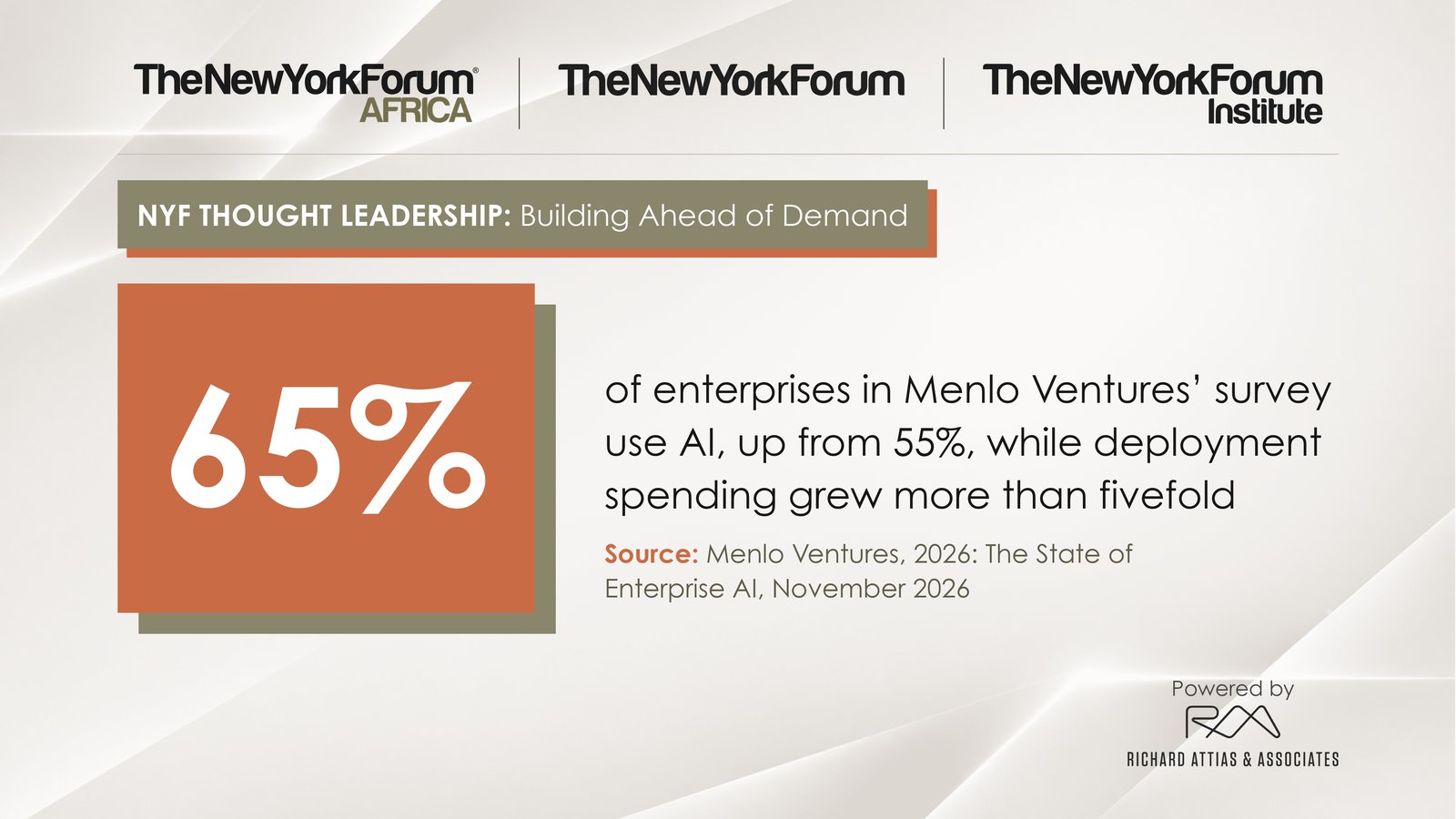
The good news is that demand for AI is growing, though spending and adoption tell different stories. Menlo Ventures estimates enterprise AI deployment spending reached $176.8 billion by September 2026, more than five times its 2025 level. Adoption among enterprises rose only from 55% to 65%, however. Most of the acceleration therefore came from heavier spending by enterprises already using AI, where spend per enterprise nearly quintupled. Spreading adoption is thus paramount for returns. The broader US economy shows how much work remains. The Federal Reserve Bank of Minneapolis reports that only about a fifth of US businesses were using AI in early 2026.
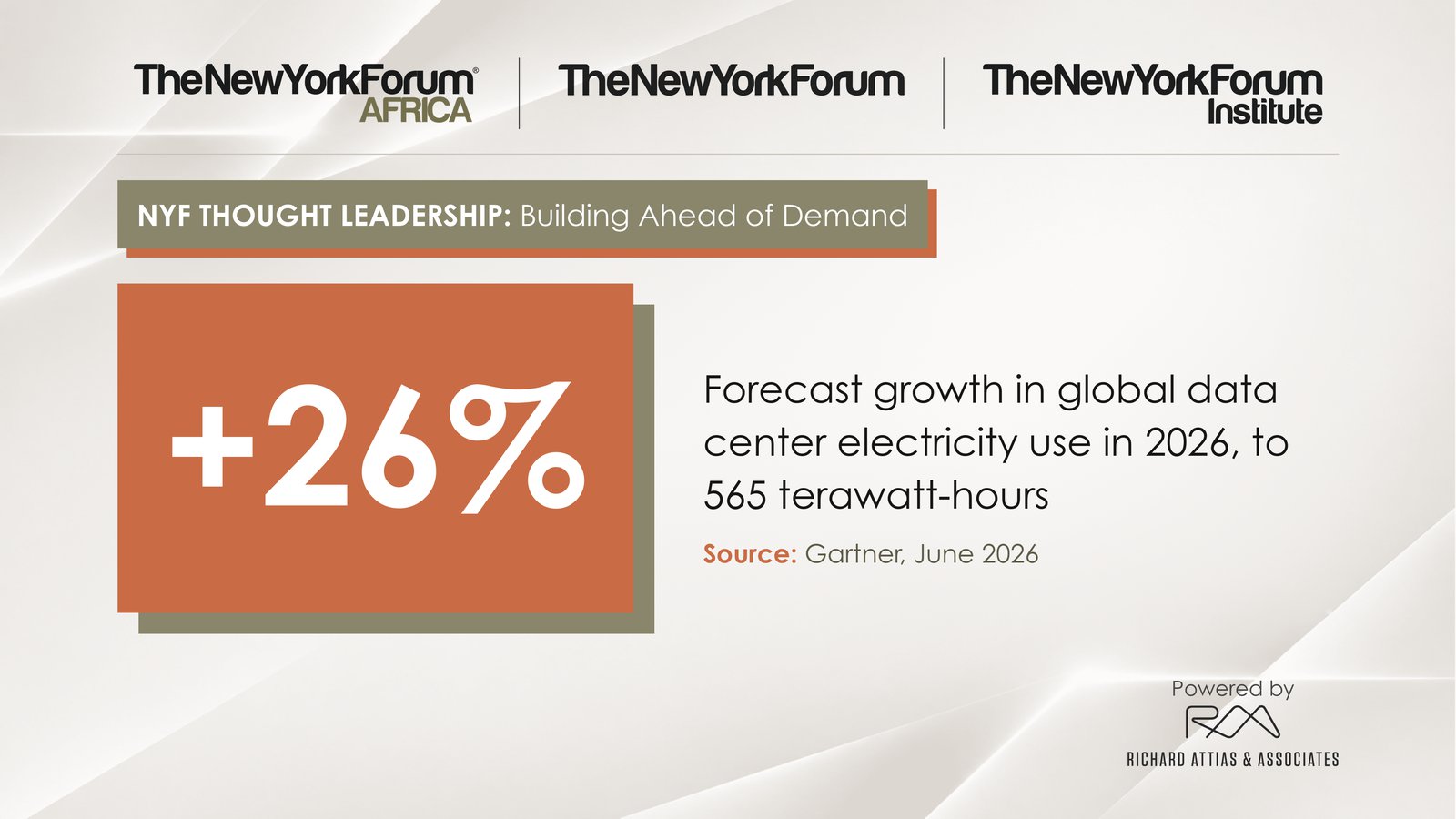
Energy supply adds another timing consideration. Generation, transmission and grid connections can take years to deliver, while specialized AI chips can lose economic value rapidly as technology advances. Gartner forecasts data center electricity consumption of 565 terawatt-hours in 2026, up from 447 in 2025, with AI-optimized servers accounting for 31%. A two-year wait for power can leave expensive equipment closer to obsolescence before it generates revenue, while financing costs continue to accumulate.
This tension extends to communities hosting large computing facilities, which the November 5 sell-off made tangible. Electricity costs, water availability and pressure on local services increasingly influence development. Projects that demonstrate how they will secure resources, protect reliability and contribute locally establish a stronger foundation for investment. Public confidence is an asset to develop throughout a project’s life, and one that is integral to the AI boom’s long-term success.
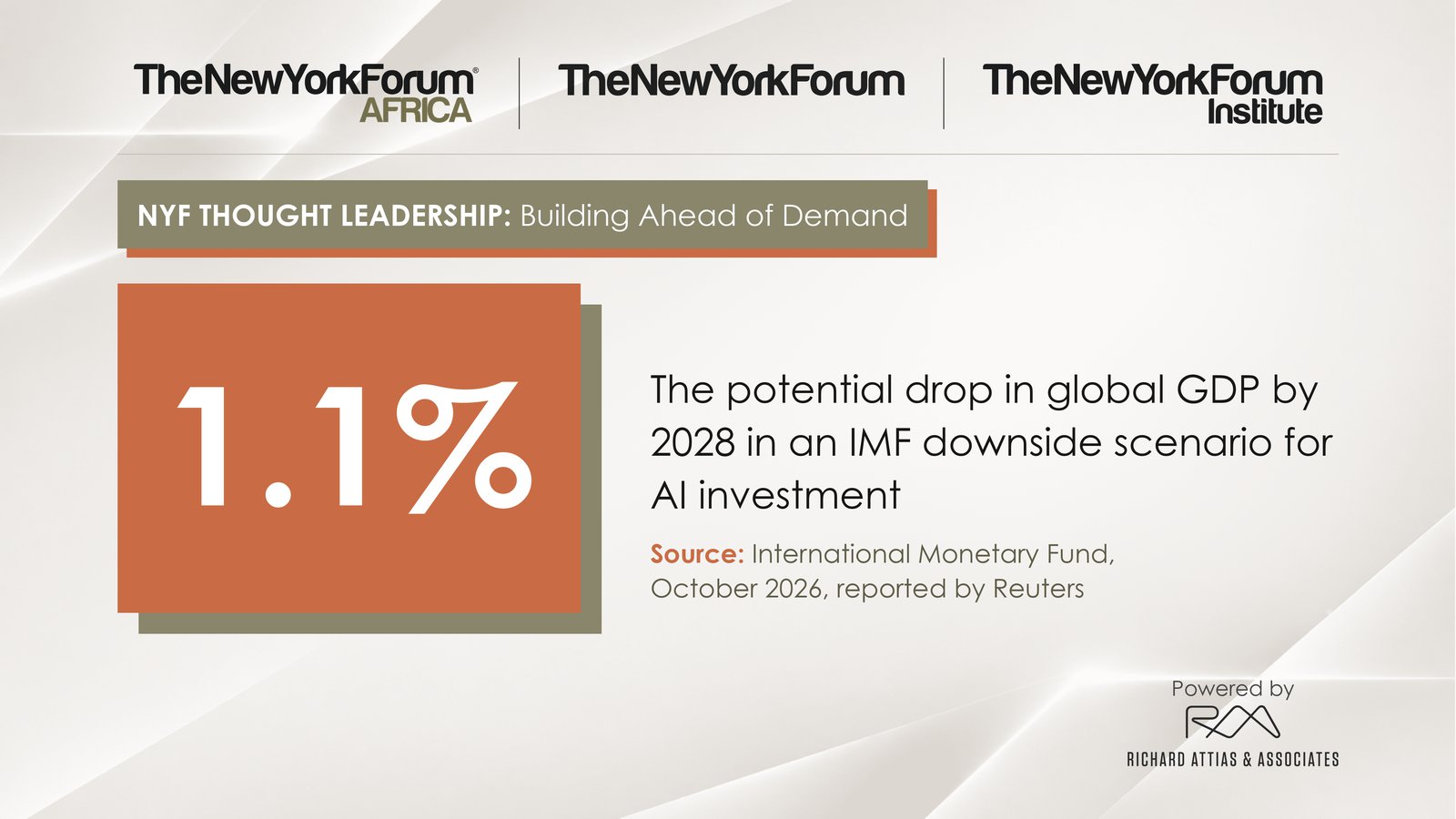
The scale of the AI buildout and the leveraged nature of its financing means the consequences of falling short could extend well beyond technology companies. In an October downside scenario, the IMF estimated that a steep drop in AI investment and a sharp fall in asset prices could leave global GDP 1.1% below its baseline by 2028, including a 1.8% shortfall in US output. This is a risk scenario, not a forecast, but it illustrates how closely the investment cycle is connected to the wider economy.
The question thus returns to one explored at every edition of New York Forum: how does investment become lasting prosperity? The ultimate test of the AI boom is whether the value it creates will bring revenues fast enough to generate the returns that match the ambition—and the capital—behind its buildout.