NYF Thought Leadership Series
Learning to Earn: Who Gets a Start in the AI Economy?
Young people are learning to use artificial intelligence before they have secured their first job. The harder question is whether employers will give them a chance to put that knowledge to work.
A 2026 survey by Omnicom and Snap found that 45% of respondents aged 16–18 across selected countries used AI for schoolwork or studying. More than 40% used it to answer questions or find information. Familiarity is developing early. Turning youths’ AI savviness into economic opportunity will require education, hiring and workplace development to evolve together.
Across their editions, New York Forum and New York Forum Africa explored how economic progress could create opportunities for the next generation. AI reframes that question within a new lens: how can young people build careers when technology is changing both the capabilities employers need and the opportunities to acquire them?
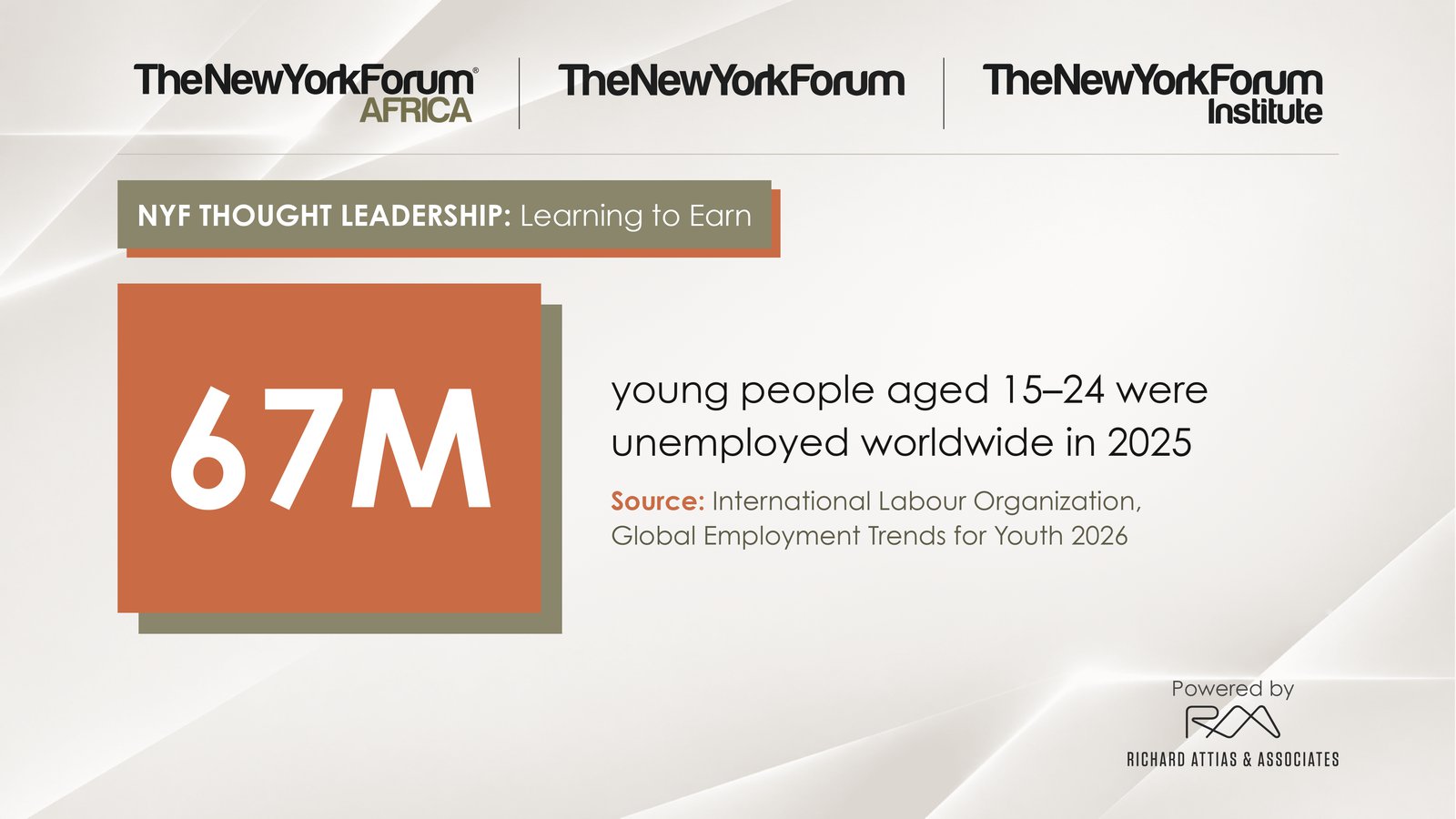
The International Labour Organization’s Global Employment Trends for Youth 2026: Back to the Future delivers a warning: global youth unemployment edged up to 12.4% in 2025, leaving 67 million people aged 15–24 unemployed. Jobs that traditionally offered entry points, including clerical and administrative positions, are shrinking. The ILO identifies technological change among several pressures and cautions that AI’s direct employment effects remain unclear.
National evidence reinforces the need for a careful diagnosis. In the UK, the Institute for Fiscal Studies found that the share of 16–24-year-olds in payrolled employment fell by 4.3 percentage points between December 2022 and December 2025, approaching the declines associated with the financial crisis and pandemic. In Canada, TD Economics attributes much of the deterioration to broader labor market weakness and increased labor supply, finding no compelling Canadian evidence yet that AI is the principal cause.
Workplace organization also matters. Research published by the Federal Reserve Bank of New York estimates that remote work could explain 64% of the increase in unemployment among young college graduates between 2017–19 and 2022–24. The authors link this to difficulties training and mentoring inexperienced employees. Their findings suggest that weakening opportunities to learn at work preceded the widespread adoption of generative AI.
AI could intensify that problem. Research, drafting and routine analysis can provide beginners with opportunities to build judgment under supervision. As technology takes on more of those tasks, employers face a choice about how junior employees will develop. Removing assignments without replacing their educational function risks weakening the supply of experienced workers businesses will eventually need.
Access creates another divide. ILO–World Bank research finds that workers facing automation pressures are often already connected to the internet, while many whose productivity could improve through AI lack reliable access. Some developing economies could therefore experience disruption before realizing the benefits. Young people need affordable connectivity and tools, alongside instruction in checking evidence, recognizing limitations and applying technology to practical problems.
Public concern is substantial. FII PRIORITY Compass 2026 finds that more than half of respondents do not believe generative AI will create more quality jobs than it destroys. Meanwhile, 69% agree that governments should prioritize vocational training over academic degrees, in a question framed around AI replacing white-collar jobs. These are perceptions, but they reveal pressure to make education more directly relevant to employment.
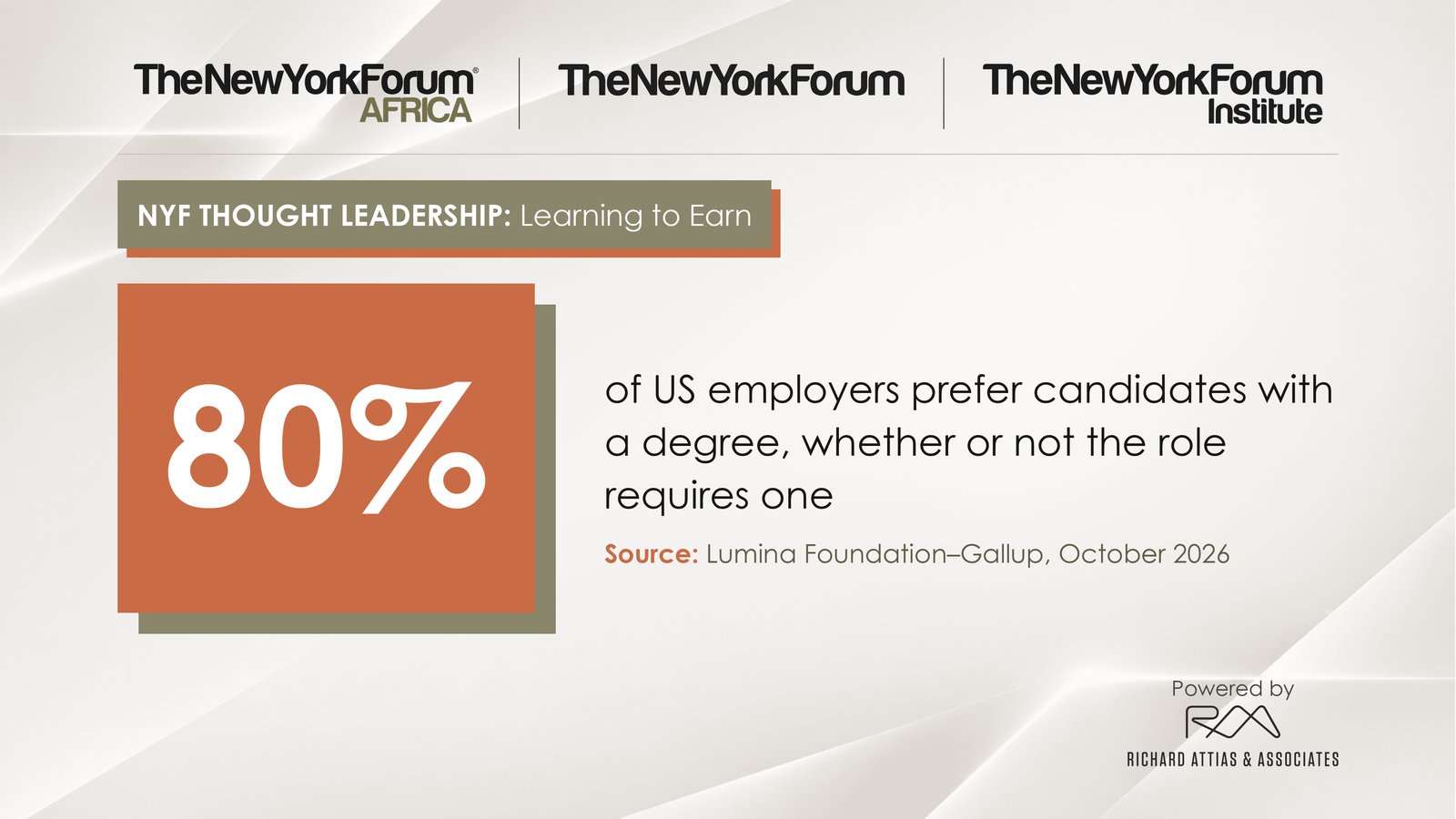
Employers’ preferences complicate that picture. A Lumina Foundation–Gallup survey of 2,500 US hiring decision-makers found that 80% preferred degree holders, regardless of whether the role required one. A generation growing up with AI may bring digital fluency and familiarity with new tools, but those capabilities do not automatically translate into the qualifications employers recognize. Although the surveys cover different populations, together they highlight the need to connect education with hiring practices. Young people need credible ways to demonstrate how their digital capabilities translate into practical value, through degrees, vocational credentials and assessed workplace experience.
Connecting education with economic opportunity also informed The New York Forum Institute’s Train My Generation initiative, launched through New York Forum Africa. Its Gabon 5000 program began in 2015, linking digital education, entrepreneurship support and preparation for employment. The underlying principle remains relevant: learning must connect to opportunities to put it into practice.
Employers should apply that principle by designing paid junior roles alongside AI adoption, with supervised responsibilities, mentoring and clear progression. Education providers should develop practical projects and qualifications with businesses. Public support for placements should reward useful work and sustained employment.
But training cannot create demand where none exists. Employment policy must also help businesses expand, reach customers and develop services that require additional people. Support for smaller firms adopting AI should include plans for workforce development, with results measured through hiring and progression as well as productivity.
The question returns to one explored throughout the editions of New York Forum: how does economic progress become shared opportunity? For the generation entering an AI economy, the answer will depend on access to meaningful work and the experience through which careers develop. An economy cannot keep demanding experience while removing the opportunities to acquire it.